Through a peer mentorship group, young Black women are finding community, confidence, and room to be themselves.
At Pathways Scarborough Village, a group of young women gathers on the first Monday of every month for a space that’s all their own.
“No boys allowed!” The familiar joke echoes down the hallway just before the door closes. Inside, laughter breaks out, followed by the shuffle of feet.
The girls drop their backpacks on the floor, assemble snacks at the sandwich bar, and pull their chairs into a circle. They settle in, ready to share what’s been on their minds since they last met in this room.
This is Queenism, a mentoring group where young Black women come together to build community, self-esteem, and the skills to navigate the world on their own terms. Created by Natalie Comrie—who now manages youth housing and Afrocentric programs at YouthLink, Pathways’ Program Partner in Scarborough Village—the initiative has offered students a dedicated space to share experiences and support one another since 2019.
Guided by Black program staff, some sessions are light-hearted and playful, with activities like crafting or decorating cookies. Other days hold deeper conversations about school, friendships, identity, and how bias, racism, and sexism surface in everyday life.
Sahvana Downes, a Pathways staff member who has facilitated the Queenism group for the past three years, draws on her lived experience to help create a sense of safety. “As Black women, we really love to take care of each other. But sometimes we’re taught to hold back to protect ourselves,” she says. “Here, they learn the beauty of leaning into that instinct—when you trust someone and they meet you there.”
Building rapport is the first step. At the start of each school year, the group co-creates a set of 10 Queen Commandments, setting a standard for mutual respect. As trust grows, students begin to share more openly and step into mentorship roles for younger girls, strengthening both the group and their own confidence.
Sahvana explains that this cycle is rooted in the African philosophy of Ubuntu. Often expressed as I am because we are, it emphasizes the interconnection between individual and collective well-being. “We’re only as strong as our community. So we’re always thinking about how to make it stronger, while also taking care of ourselves.”
Whenever possible, Sahvana taps into her network—friends, neighbours, Pathways alumni, and colleagues—to bring in opportunities that expand the group’s perspectives. One example is a self-care workshop led by Eboni Morgan, the Imani Program and Black Student Engagement Facilitator at the University of Toronto Scarborough. Sharing daily reflections and practices from her book, A Year of Black Girl Magic, she helped inspire a new Queenism project: an affirmation board on the bathroom mirror at Pathways Scarborough Village, where encouraging messages greet students each time they walk in, nurturing positive self-talk and self-perception.
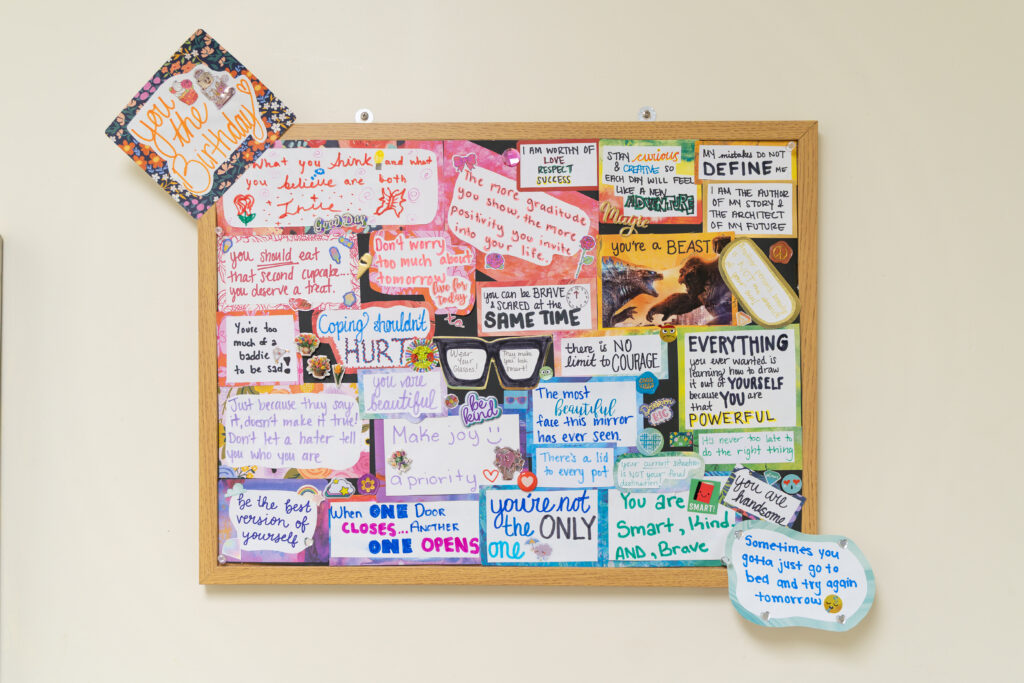
Queenism’s affirmation board, sharing encouraging messages to uplift fellow students at Pathways Scarborough Village.
Experiences outside the neighbourhood further celebrate students’ identities and introduce new possibilities for the future. A visit downtown to the Blackhurst Cultural Centre invited the group to explore Black history and art, while a trip to Corus Entertainment featured a panel of Black women professionals sharing insights into careers in the creative industry. Moments like these help them see themselves in spaces they may not have considered before.
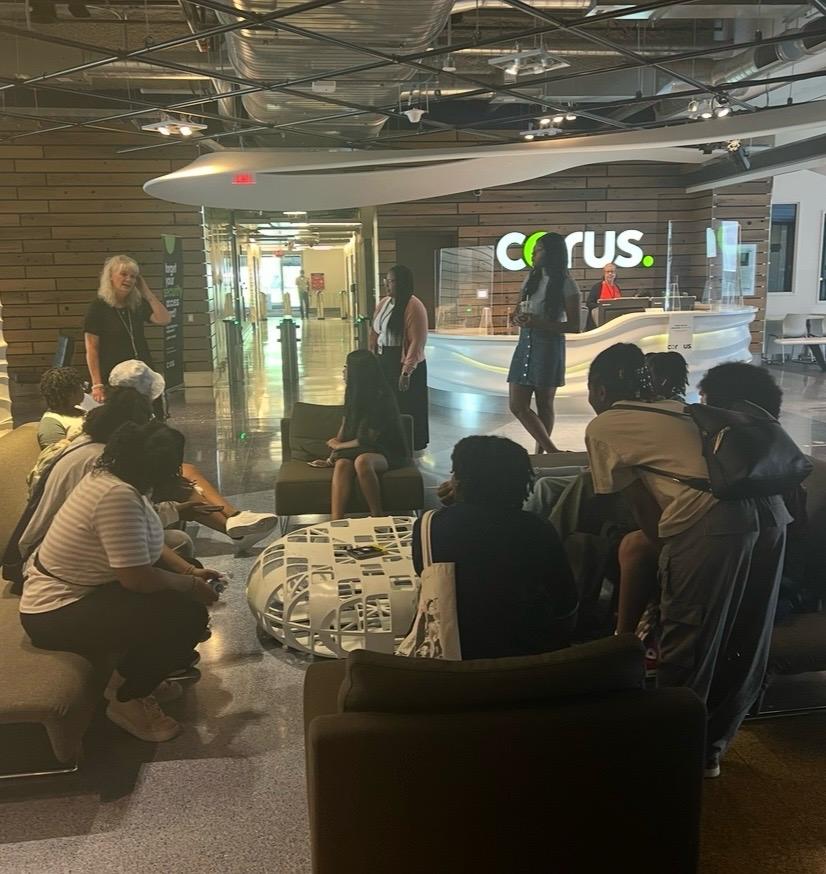
The Queenism group at Corus Entertainment for a tour of their building and a panel on careers in media.
Students are channeling their new sense of pride and leadership into supporting their broader community. One year, they organized a marketplace fundraiser with handmade bracelets, pins, and baked goods to provide care packages for a local family shelter.
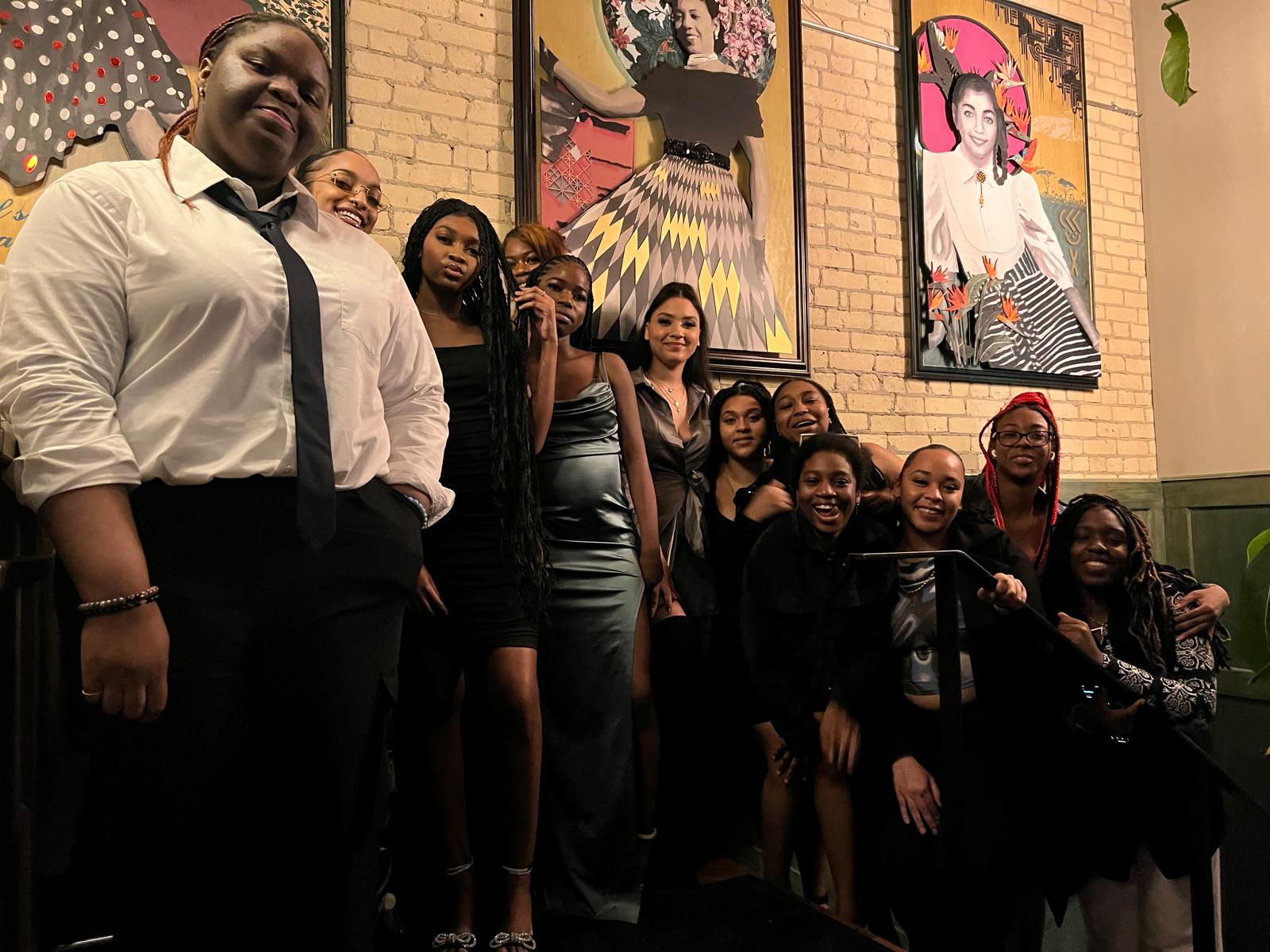
In honour of Queenism’s successful fundraiser, Sahvana organized a celebratory dinner for the group at her aunt’s Caribbean restaurant in downtown Toronto, Miss Likklemore’s.
At their monthly meetings, the same support shows up in quieter ways. Sitting together in the circle, group conversations give students room to work through personal challenges that weighed on them throughout the entire day.
“They can talk about issues without the pressure of how they might be perceived outside the room,” Sahvana says. “Having an outlet to express themselves has had a real impact on how they’re able to function at school.”
She sees the group’s growing sense of unity in informal moments: a student pausing mid-conversation to check in on a peer, or advice Sahvana once offered being passed from one girl to another.
“That’s when it really hits,” she notes. “You heard me. Not only did you hear me, but you believed it enough to share it too.”
Sahvana knows what the students have built together will extend beyond the program. “It’s so important that they leave Queenism with a deeper understanding of who they are, beyond what society tells them,” she says. “The confidence stays with them as they grow up and helps them trust their abilities to go after what’s possible.”
Back inside the Queenism room, the rhythm of their conversations continues. One girl shares. Another listens. And just like that, no one has to carry everything alone.
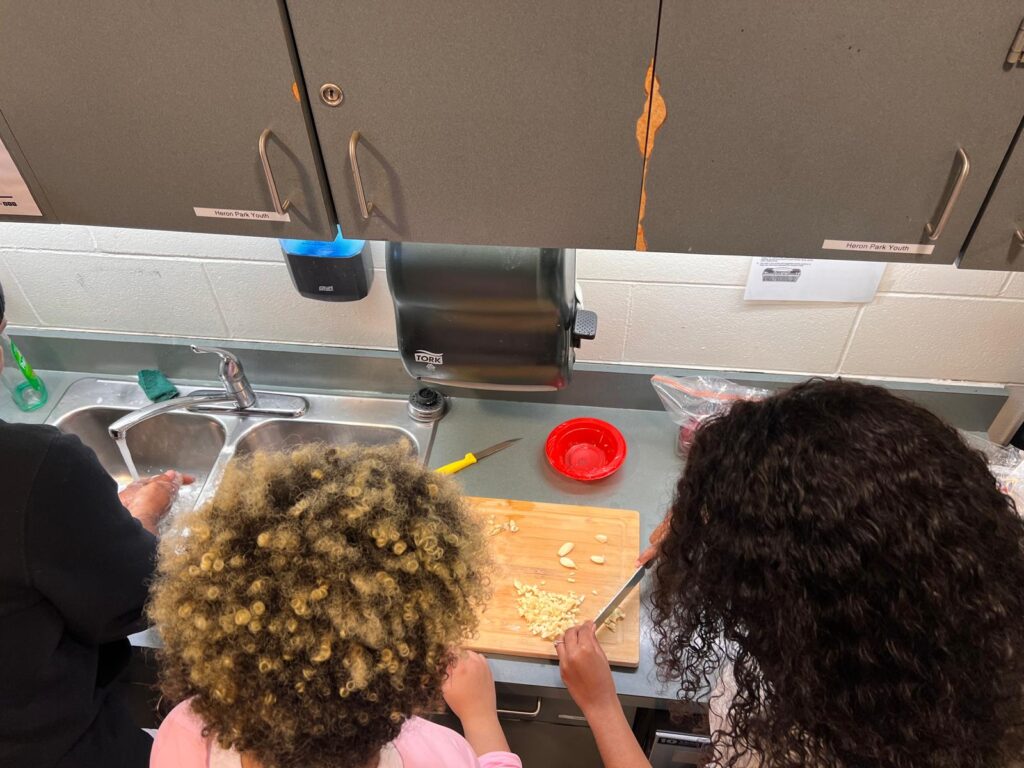
Pathways Scarborough Village collaborated with the Next Wave Youth Hub for a Queenism cooking session led by culinary arts instructor and Red Seal Chef Denzil Joyette, where students learned how to make fettuccine alfredo.